Four Breathwork Techniques for Stress, Anxiety, and Inner Peace
Breathing is one of the few things your body does entirely on its own, and yet it is also one of the simplest tools you can consciously reach for when life feels like too much. Breathwork is the practice of using intentional breathing patterns to influence how you process the feelings and experience that unfold throughout your day. A growing body of research suggests it can effectively soothe the nervous system, ease stress, and support emotional regulation. It has become an integral part of both holistic wellness and alternative therapeutic settings for good reason. At Rythmia, breathwork is a key part of our Life Advancement Program. It offers guests an accessible way to feel more grounded, present, and at peace upon arrival, and to depart with a tool that you can return to again and again through your inhales and exhales. Below are four beginner-friendly techniques you can start using today.
What Is Breathwork and Why Does It Matter?
Breathwork is the practice of consciously changing your breathing patterns to support your physical, mental, and emotional well-being. While it has taken off in popularity in our modern times, it is actually an ancient practice, stemming from the Vedic texts composed roughly 3,500 years ago. Pranayama, the yogic science of breath control, stretches back thousands of years. The word joins two Sanskrit roots: prana, meaning life force or vital energy, and ayama, meaning to extend or regulate. Pranayama is quite literally the practice of extending and directing your life force through the breath. The archaic sage Patanjali, thought to have lived around the second century BCE, named it the fourth of the eight limbs of yoga in his Yoga Sutras, placing breath regulation at the very center of the path toward a calm mind and a peaceful body. For most of that history, it was understood as spiritual technology, and what is remarkable is how well it has held up under modern scientific scrutiny.
In his book Pranayam: Breathing Techniques for Health, Healing and Tranquility, Dr. Pralhad Ron, a nuclear physicist, approaches these ancient practices through the lens of measurable physiology, examining how deliberate breathing patterns directly affect the body outside of any mystical jargon. With a physicist's rigor applied to a yogic discipline, the book is an important illustration of why breathwork has moved beyond the ashram and into clinics, therapy offices, and wellness retreats. The breath is one of the only autonomic functions you can consciously take hold of and change at will. By studying it and working with it intentionally, you gain a direct handle on a nervous system that otherwise operates beneath your awareness, helping you ease stress, calm anxiety, and cultivate a lasting sense of inner peace.
Understanding Conscious Breathing
On an average day we take about 20,000 breaths, each inhale and exhale happening in the background of our lives without a second thought as to how or why it is happening. Conscious breathing means we are thinking about and working with the breath intentionally, deliberately shaping the rhythm, depth, and pace of each pattern rather than letting your lungs run on autopilot. When you slow down, pay attention, and breathe with intention, you shift from simply breathing to actively working with your breath, using it as a tool to ground your body, quiet a busy mind, and regulate a nervous system in need of TLC. Devoted attention and focused intention are the foundation of every technique that follows below.
How Breathwork Affects the Nervous System
Your breath is directly linked to your autonomic nervous system, which governs the balance between the sympathetic branch that drives fight-or-flight and the parasympathetic branch responsible for rest and recovery. When you are stressed, your breathing often becomes quick and shallow, which keeps the body on high alert. Slowing the breath, and especially lengthening the exhale, gently signals safety to your nervous system, allowing you to relax and feel confident that you are not under any threat or danger. This can help ease the stress response and make it easier to feel calm and emotionally balanced.
Benefits of Practicing Breathwork Regularly
A single session of breathwork can offer a welcome sense of tranquility, but the deeper benefits build with consistent practice. People who practice regularly often report reduced anxiety, sharper focus, better sleep, greater emotional resilience, and a stronger sense of mindfulness. Like any positive habit, breathwork works best when it becomes part of your routine rather than something you reach for only in a crisis. The more you practice, the more naturally your body remembers how to return to a calmer baseline.
1. Box Breathing
Box breathing is one of the most beginner-friendly techniques you can learn. It’s simple and effective, which is exactly why it is a favorite of everyone from yoga teachers to Navy SEALs. It uses four equal counts (inhale, hold, exhale, hold) to create a steady, predictable rhythm that helps regulate your breathing and settle your mind. It is easy to remember and can be done almost anywhere, which allows it to be a reliable tool to reach for during stressful workdays, before an important meeting, or any time you feel overwhelmed and need to find stability again.
What Is Box Breathing?
Box breathing, sometimes called four-square breathing, is a pattern built on four equal breaths that are the same length. Its simplicity is what makes it so beginner-friendly, and its steady rhythm is what makes it so effective for restoring calm and concentration under pressure.
How to Practice Box Breathing?
Sit upright somewhere comfortable and exhale fully to begin. In your mind's eye, picture a square, and trace one side with each part of the breath: inhale up the first side through your nose for a count of four, hold gently across the top for four, exhale down for four, then hold empty along the bottom for four. That is one round, one full trip around the square. Continue for four to six rounds, or roughly one to two minutes, keeping each count even and unhurried. If four feels like a strain, start with a count of three. Return to it a few times a day, or any time you feel stress building.
When Box Breathing May Be Most Helpful
Box breathing works best in the moments when you need to ground yourself fast. Try it before a presentation or difficult conversation, during a hectic workday, while traveling through a busy airport, or any time your mind feels anxious, scattered, or overwhelmed.
2. 4-7-8 Breathing
The 4-7-8 technique is designed to bring the body into a state of deep relaxation by slowing the breath and, most crucially, extending the exhale. Popularized by Dr. Andrew Weil, it is inspired by the yogic principle that a long, complete exhale helps activate the body's rest-and-recovery response. Because a drawn-out exhale can be so calming, this technique is especially loved as a wind-down practice before sleep, or as a way to soften the edges of an anxious or emotionally charged moment.
Understanding the 4-7-8 Technique
The 4-7-8 technique takes its name from its counts: a four-count inhale, a seven-count hold, and an eight-count exhale. As we mentioned before, the extended exhale is the key. When you breathe out for longer than you breathe in, you gently encourage the nervous system to shift toward calm, which is why many people find this method so soothing.
Step-by-Step Process
Rest the tip of your tongue behind your front teeth and exhale completely. Inhale quietly through your nose for four, hold for seven, then exhale slowly through your mouth for eight. Repeat this process for four rounds. If the seven-count hold feels too long at first, shorten all three numbers while keeping the same ratio, and build up gradually.
Best Times to Use This Technique
4-7-8 breathing is a natural fit for bedtime and can be a gentle companion when sleep feels out of reach. It is also helpful during moments of acute anxiety, or in the aftermath of an emotionally demanding day when you need to downshift and reset. This technique aids in relaxation, so, truthfully, it is best used whenever you need to do just that.
3. Coherent Breathing
Coherent breathing, which is also sometimes called resonance breathing, focuses on slowing your breath to a smooth, steady rhythm of about five to six full breaths per minute. While it is considerably slower than we are used to breathing, this measured pace is thought to support nervous system regulation and healthy heart rate variability. The slow breaths help the heart, lungs, and mind fall into sync. Unlike techniques with holds and specific counts, coherent breathing is all about finding one continuous, circular flow you can sustain and return to.
What Is Coherent Breathing?
As we mentioned in the passage above, coherent breathing means maintaining roughly five to six breaths per minute. This process asks you to maintain a smooth, even rhythm with no holds between the inhale and exhale. By achieving this gentle pace, you are able to help encourage a sense of equilibrium within the nervous system. Around six breaths per minute is what researchers call the body's resonance frequency, the pace at which your breath, heart rate, and blood pressure naturally fall into sync. Studies have shown that breathing at this rate maximizes heart rate variability, a marker of how flexibly your nervous system can shift between alertness and calm, while strengthening the baroreflex and vagal tone, the systems that help your body recover from stress. Higher heart rate variability is associated with greater resilience and better cardiovascular health overall.
How to Practice It?
Sit or lie down comfortably and breathe in through your nose for a count of about five, then out through your nose for the same count, with no pause in between. Aim for one continuous, flowing breath rather than sharp starts and stops. Because this pace is slower than it feels, set a gentle timer for five to ten minutes so you can stay with the rhythm without watching the clock, or use a breathing app or a looped audio track that cues each inhale and exhale for you. Once the rhythm feels natural, coherent breathing is easy to fold into daily life. Try a few minutes first thing in the morning, during a mid-afternoon lull, or as you wind down for bed, and lean on it whenever you feel your system starting to rev up.
Potential Benefits
When practiced consistently, coherent breathing may support healthy heart rate variability, deeper relaxation, and steadier emotional balance. Many people find it helps them maintain a sense of calm that carries through the day, making it a lovely practice to weave into a morning or evening routine.
4. Alternate Nostril Breathing
Alternate Nostril Breathing is a traditional yogic practice, known in Sanskrit as Nadi Shodhana, or channel cleansing. By gently directing the breath through one nostril at a time, it encourages slower, more intentional breathing while cultivating mental clarity and balance. The focused, deliberate nature of the practice makes it a wonderful way to center yourself before meditation or yoga, or any time you are seeking greater concentration.
What Is Alternate Nostril Breathing?
This classic yogic technique involves alternating the flow of breath between your left and right nostrils. It is renowned for balancing the mind, body, and spirit, and it invites a meditative quality of attention that naturally slows the breath and settles a restless mind.
How to Perform It Safely
Sit tall and rest your left hand in your lap. Bring your right hand up and use your thumb to close your right nostril, inhaling slowly through the left. Close the left nostril with your ring finger, release the right, and exhale. Inhale right, switch, exhale left. That full cycle is one round, and each breath can run about four to five counts in and the same out. Continue for five to ten rounds, or roughly two to five minutes, keeping the breath soft, and rest if you feel lightheaded. Beginners can start with just a minute or two and build from there.
When This Technique May Be Beneficial?
Alternate nostril breathing is ideal before meditation or yoga, when you want to arrive present and focused. It can also be used as a grounding practice when you are feeling stressed or anxious, or whenever you are looking to clear mental fog before a task that asks for your full attention. Since it balances and steadies the mind, many people find it sharpens concentration and quiets the mental noise that gets in the way of deep work. That same settled, focused state is often where creativity and inspiration lives, so it can be a lovely way to drop into a flow state before you write, make art, brainstorm, or take on anything that asks you to think outside the box or be agile with your mind.
How Breathwork Supports the Healing Journey at Rythmia?
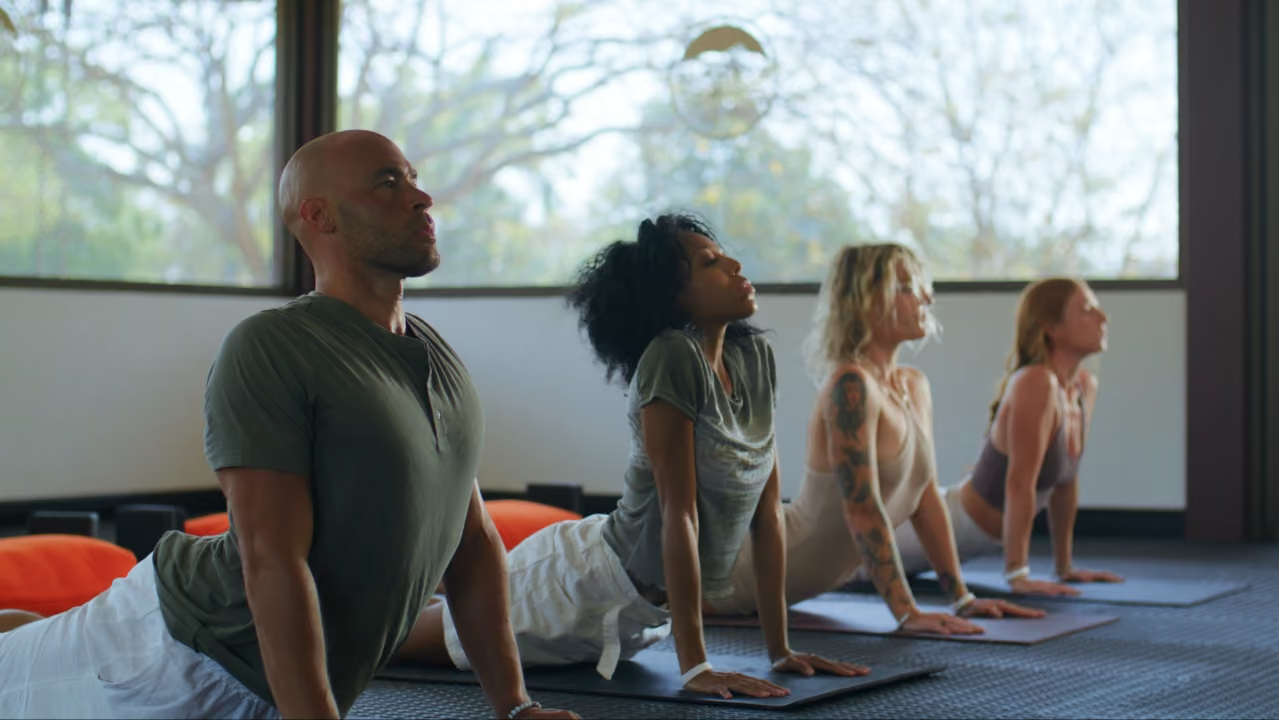
At Rythmia, breathwork is a critical and meaningful part of our Life Advancement Program. Our breathwork sessions allow guests to slow down, become more present, and cultivate the emotional awareness that supports deeper personal development throughout the week, building off the plant medicine, yoga, meditation, and transformational classes so it all works together. Led by experienced facilitators, these sessions complement the Rythmia Way by offering a natural path to self-reflection, emotional resilience, and lasting growth. In fact, many of our guests share that they experience their first miracle during breathwork. In this way, breathwork becomes both an anchor during your time with us and a tool you can carry home, with guided breathwork practices available in our RLife app integration program, gently supporting your well-being long after you leave.
FAQs (People Also Ask Questions)
Which breathing technique is best for anxiety?
There is no objectively best technique, since everyone responds a little differently. However, many people find that methods with a longer exhale, like 4-7-8 breathing, are especially calming for anxiety. Box breathing is another popular choice for its ease and steady, grounding rhythm. The most effective technique is often the one you feel best practicing consistently, so it is worth trying a few to see which resonates most, and feels most soothing for you.
Can breathwork help with stress?
Yes, breathwork can be a helpful tool for managing stress. As we’ve explored throughout this article, slow, intentional breathing gently activates the parasympathetic nervous system, which eases the body out of fight-or-flight and toward a calmer state. Breathwork is not a replacement for professional care when stress feels unmanageable, but it does offer an accessible, portable practice you can return to whenever you need a moment of relief.
What does the 4 7 8 breathing technique do?
As we spoke about earlier, 4-7-8 technique slows your breathing and lengthens the exhale, inhaling for four counts, holding for seven, and exhaling for eight. That extended exhale lets the nervous system know that it is safe to relax. Many people use it to unwind before sleep or to soften moments of anxiety, finding that it helps quiet a racing mind.
How long should a breathwork session last?
Even a few minutes can make a difference, so there is no need to set aside a large block of time to practice breathwork. Many techniques are effective in just two to five minutes, while practices like coherent breathing tend to feel best around five to ten minutes. Consistency tends to matter more than duration, so a short daily practice often serves you better than an occasional long one.
Can breathwork improve sleep?
Many people find that breathwork supports better sleep, particularly slow techniques that lengthen the exhale, such as 4-7-8 breathing. By calming the nervous system and turning the volume down on mental chatter, these practices can help ease the transition into rest. Trying a few slow rounds as part of your bedtime routine may help you wind down more gently.
Experience Breathwork in a Supportive Healing Environment
At Rythmia, guided breathwork is part of our comprehensive Life Advancement Program that also includes plant medicine, yoga, meditation, personal development classes, nourishing farm-to-table food, and other holistic modalities designed to support your healing journey, and allow you to achieve a miracle during your week with us. Wherever you are on your journey, we would be honored to help you take the next breath forward.